“The lease on the studio has been terminated.
Our club membership is suspended.
The cars may be repossessed.
He told me he had everything under control.”
“You both signed the mortgage agreement.”
“He told me it was ceremonial.”
“You were thirty five years old.
You had an attorney.
You initialed every page.”
Fedra’s eyes filled with anger.
“You think this makes you strong?”
“No,” Camille said.
“It makes me finished.”
She walked toward the library.
Donovan sat behind Roland’s old walnut desk.
Camille stopped in the doorway.
The desk had once stood in Laurent Construction’s first office.
Roland had written payroll checks there when the company had only six employees.
After his death, Donovan asked to keep it because he claimed it reminded him of his father.
Now unpaid bills covered its surface.
Donovan looked exhausted.
His face had lost its polished confidence.
An open bottle of whiskey sat beside his hand.
“Marshall can wait outside,” he said.
“Marshall is staying.”
Donovan laughed without humor.
“You trust him more than your own son.”
“Today, yes.”
He pushed a document across the desk.
“I found a private lender.
They will refinance the mortgage if you agree to subordinate your ownership interest.”
Marshall did not touch the page.
“What is the rate?” he asked.
“Fourteen percent for the first year.”
“And after that?”
Donovan looked away.
“Variable.”
Marshall picked up the document and read the first page.
“There is a balloon payment in eighteen months.
You would lose the house anyway, and Camille could lose her entire investment.”
“It buys time.”
“No,” Camille said.
“It sells the future to protect your image for another year.”
Donovan struck the desk with his palm.
“What do you want from me?”
“The truth.”
“You already decided I’m a criminal.”
“Did you take money from my reserve account?”
He stared at her.
“Yes.”
“Did you withdraw Elise’s tuition money?”
“Yes, but I intended to restore it.”
“Did you submit the equity application with my signature?”
His mouth tightened.
“Fedra’s assistant copied it.”
“Did you authorize that?”
He remained silent.
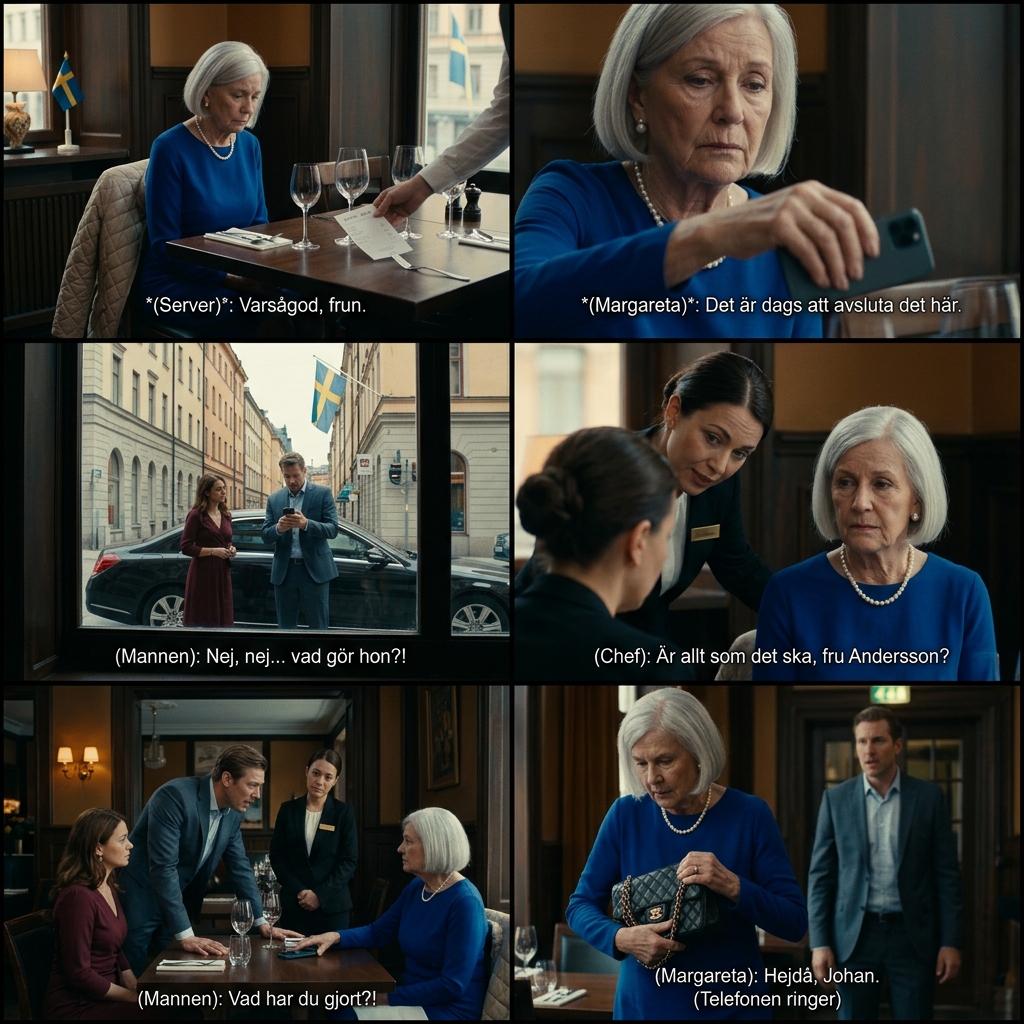
“Did you leave me at the restaurant knowing the bill would be presented to me?”
“It was one dinner.”
“That is not an answer.”
He stood.
“Yes.
I knew.”
The room seemed to hold its breath.
“Why?”
Donovan looked at the bills spread across the desk.
“Because the card was near its limit.
Because Fedra invited people we were trying to impress earlier that week.
Because you could afford it.
Because every time something went wrong, you paid.”
Camille nodded slowly.
“You believed I would pay because I always had.”
“Yes.”
“And when I did not?”
“I thought you were punishing me.”
“I was finally refusing to punish myself.”
Donovan sank back into the chair.
His anger drained away, leaving only fear.
“What happens now?”
“The house will be listed.”
“Where am I supposed to go?”
“You are forty seven years old.”
“That is not an answer.”
“It is the only answer you need.”
He covered his face with both hands.
For several seconds, no one spoke.
Then Donovan looked at her through his fingers.
“Did you ever love me, or was I always a financial risk to you?”
Camille felt the question cut into her.
She crossed the room and stood on the other side of Roland’s desk.
“I loved you so much that I kept protecting you from consequences.
I told myself it was kindness.
It was not.
Every time I erased the cost of your choices, I taught you that someone else would always pay.
Your father saw it before I did.”
Donovan’s eyes moved to Roland’s signature framed on an old company certificate.
“He thought I was a failure.”
“No.
He feared you would become one if we kept making failure comfortable.”
Donovan began to cry.
Not the controlled tears he had used on Camille’s porch.
These were quiet and ugly.
Camille wanted to go around the desk and hold him.
Every instinct she had carried since his birth urged her to say the sale could wait, that she would fix the tuition account, that one more chance might save him.
Instead, she remained where she was.
Love did not always look like rescue.
Sometimes love stood still while another person faced the life they had built.
The house sold four months later for one million nine hundred thousand dollars.
After the mortgage, taxes, legal costs, and liens were paid, Camille received her forty percent share.
Donovan’s remaining proceeds covered most of what he owed Camille and Elise, though not all of it.
Fedra filed for divorce before the sale closed.
She moved to another state and blamed Donovan publicly for the failed studio.
Several vendors sued the business.
Her social media pages, once filled with photographs of marble rooms and elaborate dinners, became quiet.